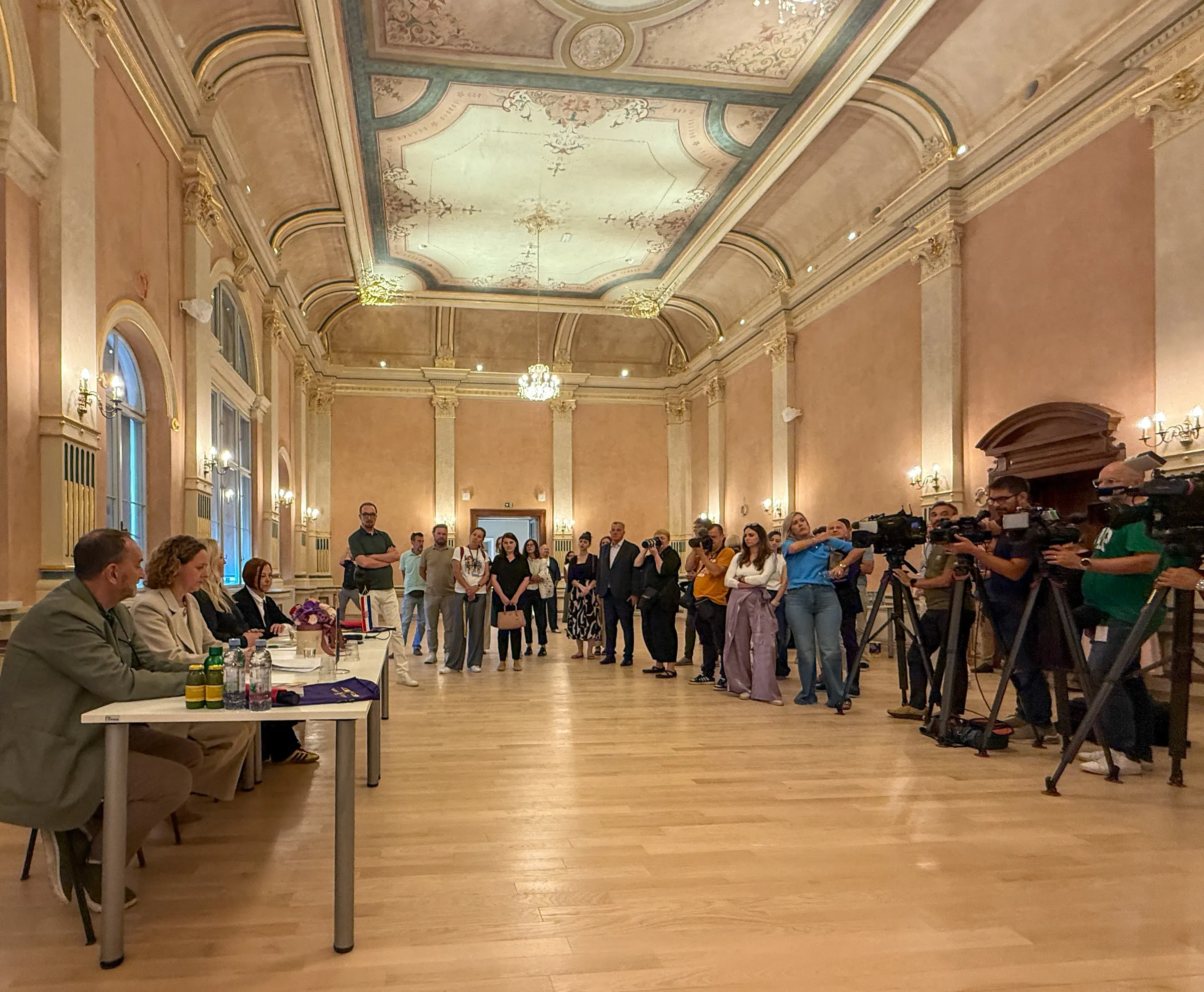
A time capsule was also placed to symbolically mark the completion of the multi-year restoration of the Mimara Museum building, the central part of the former School Forum complex and one of the most significant historicist buildings in Zagreb's Lower Town.
From the School Forum to the Mimara Museum
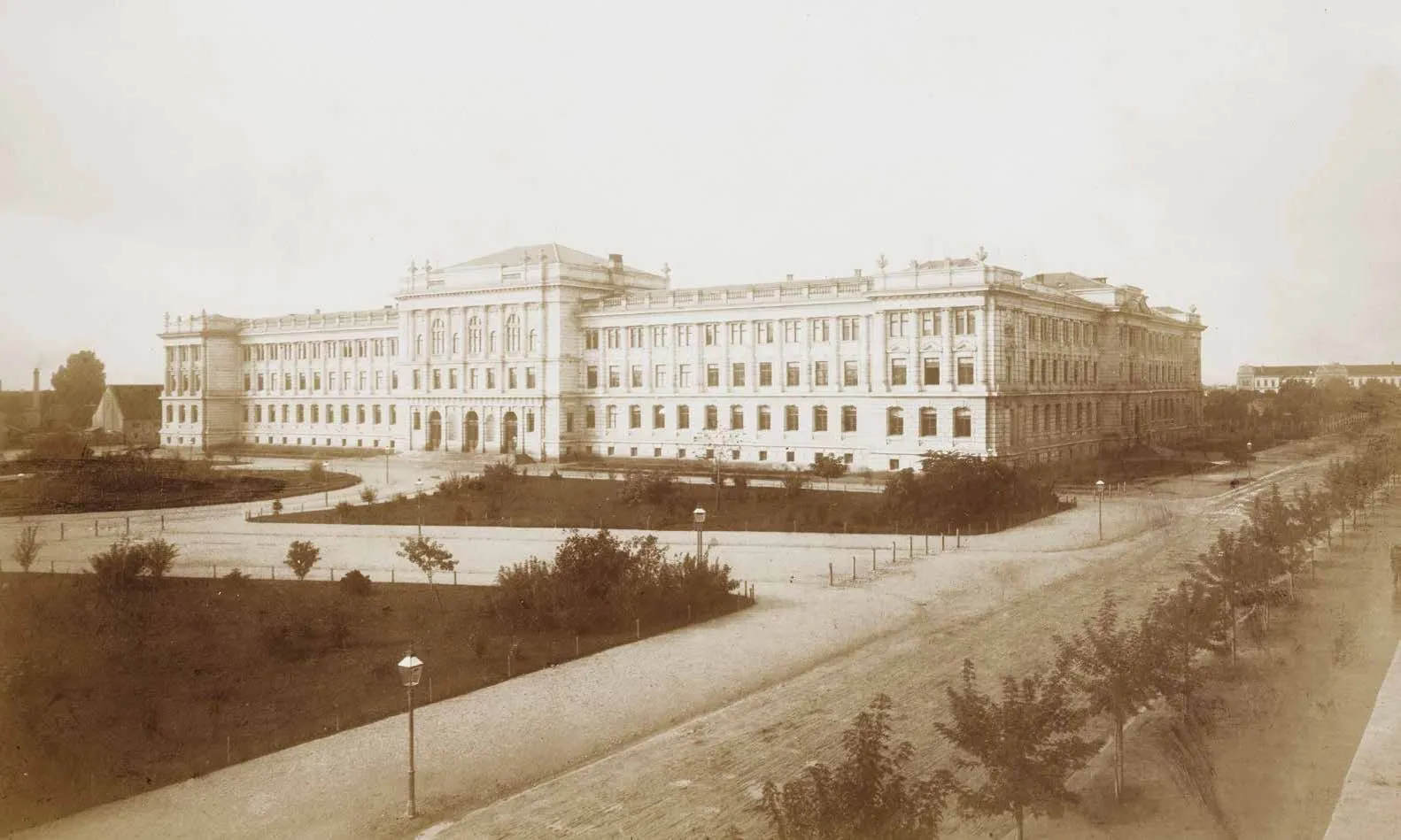
The present Mimara Museum building was originally constructed as the central part of the School Forum, the largest architectural complex in nineteenth-century Zagreb. Built during the intensive development of the Lower Town following the earthquake of 1880, it was ceremonially opened on 14 October 1895 in the presence of Emperor and King Franz Joseph I.
The School Forum was initiated by Izidor Kršnjavi, head of religious affairs and education, and designed by Ludwig & Hülssner, a prominent European practice specialising in school buildings, based in Leipzig and Berlin. Its monumental historicist design envisaged a larger urban complex with museums and a church, modelled on major European city centres. Although this ambitious plan was never fully realised, the building remains one of the Lower Town's most valuable architectural and urban achievements.
Conversion of the central building into the Mimara Museum was completed in 1987. Original architectural features were preserved as far as possible, with spatial and design adaptations to its new museum function.
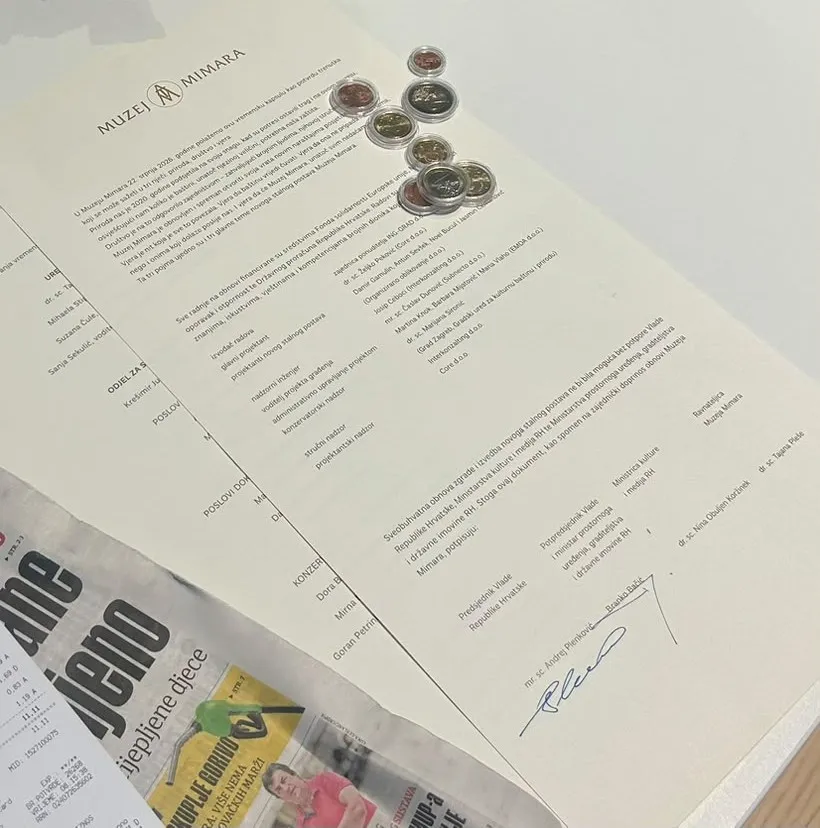
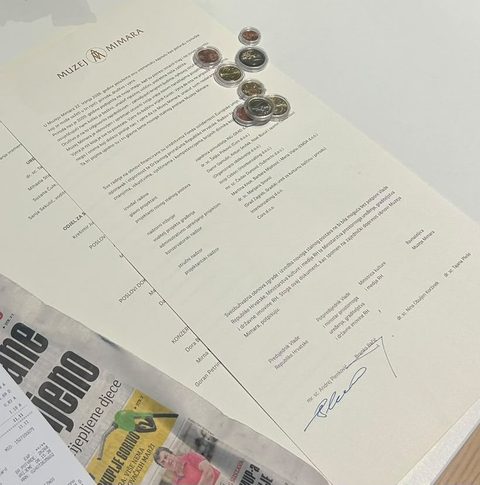
The time capsule was placed in a display case as the first exhibit and as a lasting record of the completion of the restoration and the period in which this important project was carried out. It contains coins (1, 2, 5, 10, 20 and 50 cents, as well as 1 and 2 euro coins), a daily newspaper, a shop receipt listing basic groceries, and a charter.
The charter was signed by Prime Minister Andrej Plenković; Deputy Prime Minister and Minister of Physical Planning, Construction and State Assets Branko Bačić; Minister of Culture and Media Nina Obuljen Koržinek; and Mimara Museum Director Tajana Pleše. Its text uses the concepts of nature, society and faith to evoke the force of the 2020 earthquake, the solidarity that made restoration possible, and the responsibility to preserve heritage for future generations. These are also the three central themes of the new permanent display.
After the capsule was placed, guests toured the museum's exhibition spaces, followed by the project's closing conference.
Chief designer Željko Peković (Core d.o.o.) and conservation specialist Marijana Sironić of the City Office for Cultural Heritage and Nature discussed the restoration and the demanding design and conservation processes.
Restoration after the earthquake focused on preserving the building's historical and architectural value and creating conditions suited to a contemporary museum. Alongside structural reinforcement and energy renovation, historic features underwent conservation and restoration. Interior spaces were adapted to contemporary standards for preserving, researching, interpreting and exhibiting works of art.
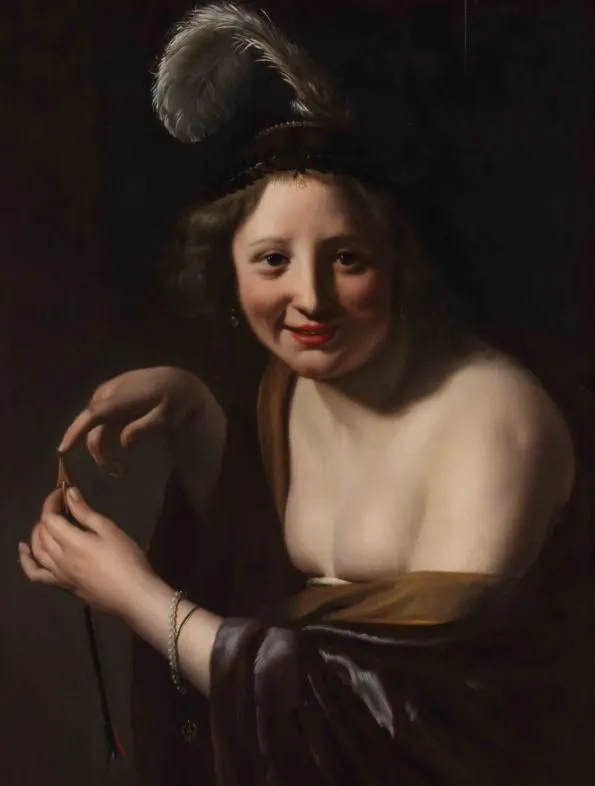
Mimara Museum Director Tajana Pleše presented the principal features of the new permanent display, organised around nature, society and faith. She emphasised that a key challenge was to develop an approach that would bring art closer to visitors of different generations.
Minister of Culture and Media Nina Obuljen Koržinek described the Mimara Museum's restoration as part of the extensive post-earthquake renewal of cultural heritage in Zagreb and central Croatia, involving more than 50 museums, archives and libraries and over 500 individually protected buildings and cultural monuments. She highlighted the complexity of the multi-year process, from emergency protection and documentation to extensive conservation, structural and energy works, describing it as a generational undertaking. She thanked the experts, institutions and all participants who contributed to the project.
Completion of the construction work made it possible to begin the final preparations for reopening the Mimara Museum, which was planned for October 2026.